
Research
Kia Haumaru teaches skills for avoiding, recognising, interrupting, resisting and healing from the effects of interpersonal violence. We teach in a trauma-sensitive way that addresses the social, emotional and psychological barriers that can make standing up for ourselves difficult.
We use an Empowerment Self-Defense (ESD) model which is a comprehensive form of personal safety education and violence prevention for those targeted by gender-based violence – primarily women and other marginalised genders.
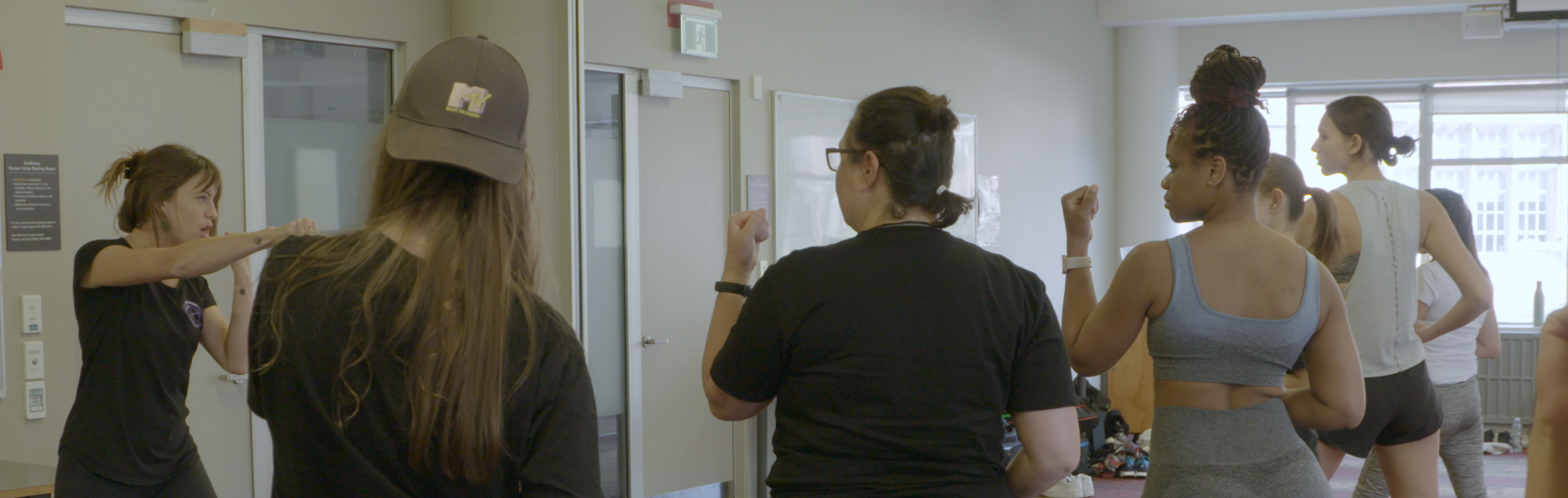
Our programmes have been independently evaluated and researched extensively.
The findings have all overwhelmingly confirmed that Kia Haumaru’s courses demonstrate the positive impacts and outcomes found internationally. For more information on any of the following research, please don’t hesitate to contact our administration team.
- Talk & The Body (2025)
- Skills for Safety (2016)
- Other Research on our Programmes
- Empowerment Self-Defense
Using Talk and the Body to Prevent Gender-based Violence
Ko te kōrero, me te tinana hei ārai i te tūkino ā-ira
A Marsden funded research project led by Prof. Ann Weatherall and Bell Murphy at Victoria University’s School of Psychology.
Project Introduction Video
Overview of the Project
It is well established that ESD classes are effective in preventing violence. Less well understood is how these programmes work to transform people and make them less vulnerable to violence. This research project aimed to fill this gap in knowledge by investigating what is done in ESD classes in Aotearoa. The importance of this research has been recognised with a prestigious Marsden funding grant from the Royal Society of New Zealand Te Apārangi.
Over a period of four years (2020–2024) we video-recorded and qualitatively analysed eleven ESD classes, taught by eight kaiako/teachers to around 200 students (ranging from 8 to 70 years old) around Aotearoa New Zealand. This resulted in over 55 hours of footage which became the data for our study.
The recordings are a rich resource for investigations. So far, our team has produced over 30 outputs which are listed below. These include a short video showcasing the work of Kia Haumaru and a suite of training materials based on our data which are being used by Kia Haumaru for ongoing professional development on a range of topics listed below.
So far, we have delivered 30 oral presentations at conferences across the world. We have produced 6 written publications in the form of academic journal articles and book chapters with several more articles still in development (see list below for links). The titles indicate the breadth of topics investigated. They include an examination of the psychological, verbal and physical strategies taught; how kaiako/teachers cultivate personal empowerment and work toward social change; and how a Kaupapa Māori approach further strengthens ESD in Aotearoa.
Our findings point to the transformational principles underpinning ESD in Aotearoa and document the broad range of activities used to apply them in class. These practices contribute to the well- documented positive impacts of ESD for individuals and communities.
We gratefully acknowledge the Marsden grant from the Royal Society of New Zealand Te Apārangi and the support of Kia Haumaru without which our work would not have been possible.
The Research Team
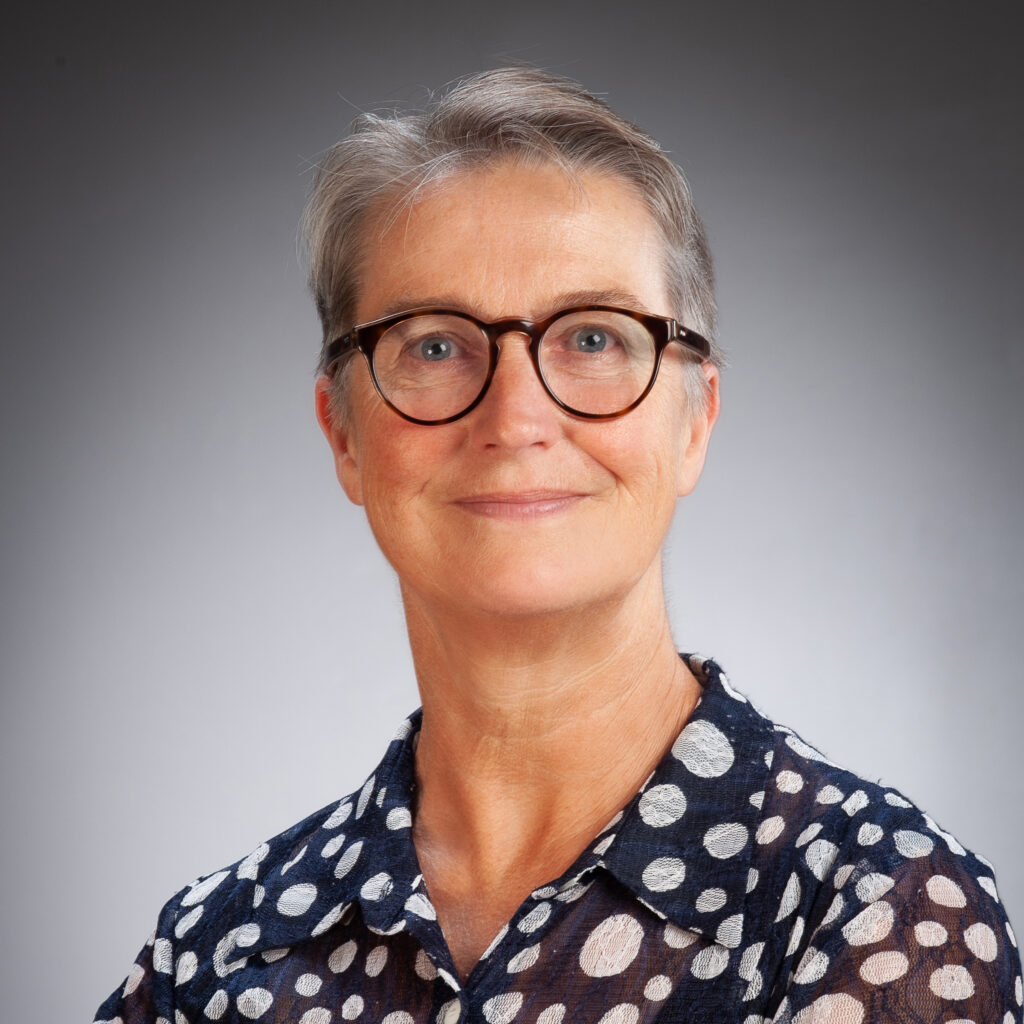
Ann Weatherall — Co-principal Investigator
ann.weatherall@beds.ac.uk
Ann Weatherall originally motivated this project. She is an adjunct professor of Psychology at Te Herenga Waka—Victoria University of Wellington and is also a professor and Head of School of Psychology at University of Bedfordshire, UK. She studies language and communication drawing on, and further developing, feminist and discursive psychological theories and methods. Ann has published seven books and more than 135 journal articles, book chapters, and other scholarly publications on a wide range of gender issues, including motherhood, sex work, and violence. Her work has led to theoretical and empirical re-specifications of key disciplinary topics including age, cognition, emotion, gender and sexuality. Currently, she is focusing her work on the problem of gendered violence. In addition to this project, she is working on one that examines calls to the police classified as ‘family harm’.
Ann is leading the project with Bell and is primarily responsible for producing the scholarly outputs.

Bell Murphy — Co-principal Investigator
bell@kiahaumaru.org.nz
Bell Murphy is an accredited self-defence teacher and member of Kia Haumaru—Personal Safety Education. She holds a BA (Hons) in Social Anthropology and is a PhD candidate in the Gender Studies Programme at the University of Otago. Her research seeks to illuminate the meaning of empowerment in the context of ESD programmes in Aotearoa/New Zealand. This terrain is explored both theoretically and empirically through her autoethnographic experience as an empowerment self-defence teacher and thematic analysis of interviews with other teachers.
Bell is a co-leader of the project overseeing all aspects of its delivery, alongside project founder, Ann Weatherall.
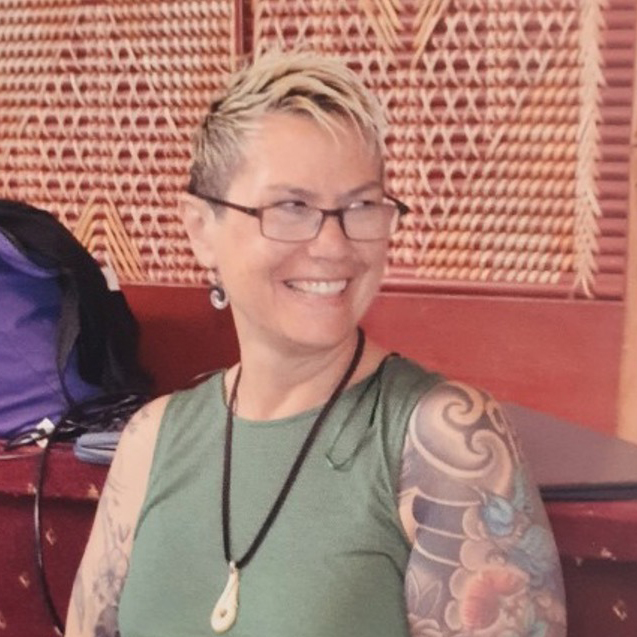
Annie Tupaea – Associate Investigator – Kaupapa Māori and Personal Safety Research
annie.tupaea@outlook.co.nz
Annie Tupaea is an accredited Kia Haumaru kaiako and network member since 2017 where her current roles include Māori co-chairperson of the Kia Haumaru Board, lead trainer of the Training and Evaluation Team, and a member of the Kaupapa Māori Course Development Team. Annie also leads a Women’s Refuge in the eastern area of Tāmaki Makarau, a role that involves leading the Māori Growth Strategy for the organisation. With a Bachelor of Counselling and a Diploma in Māori Mental Health, Annie has centred her work on healing with a Te Ao Māori world view.
Annie’s role on the Talk and the Body project is to lead and oversee the Kaupapa Māori and Personal Safety Research Project (KMPS). The role involves supporting the development of a Kaupapa Māori programme for Kia Haumaru that is informed by historical, social and political analyses of family violence and which centres the strength, power and courage of wāhine Māori. Her Report Te Māuri o te Wahine is both theoretical and practical, documenting and further developing a Māori worldview in the context of violence prevention/empowerment education.
Former Team Members
- Prof Joanna Kidman - Associate Investigator
- Dr Nichola Tyler – Associate Investigator
- Lorenza Mondada – Associate Investigator
- Dr Emma Tennent – Associate Investigator
- Gemma Mackenzie – Research Assistant and Technician
- Maja Zonjic – Research Fellow
- Ann Doehring – Research Assistant
- Hannah Aslett – Research Assistant
- Chelsea Gardiner – Research Assistant
- Fiona Grattan – Research Assistant
- Charm Phear – Research Assistant
- Amy Wikaira – Research Assistant
- Sarah Bowen – Summer Scholarship recipient and Research Assistant
- Chloe Te Moananui – Summer Scholarship recipient and Research Assistant
- Meg Wolmarans – Summer Scholarship recipient
Outputs from the project
Where available, we have provided a link to the resource below.
- Publications
- Oral Presentations
- Other
- Weatherall, A. (under review). Choral and collective embodied actions in feminist, empowerment self-defence classes. Interactional Linguistics
- Weatherall, A & Murphy, B., Doehring, A., (in press). Gender and inclusive language use in feminist self-defence classes. In Burnett, S & Vigo, F. (Eds.), Battlefield Linguistics: Contemporary contestations of language, gender and sexuality. De Gruyter-Mouton.
- Murphy, B., (in press). Beyond Personal Empowerment: the role of critical consciousness in ESD classes in Aotearoa. In L.M. Orchowski and J. Hollander (Eds.), Empowerment Self-Defense: Theory, Research and Practice.
- Weatherall, A & Murphy, B., (in Press). Voice and empowerment self-defence. In L.M. Orchowski & J Hollander (Eds.), Empowerment self-defence: Theory, research and practice.
- Weatherall, A. (2023). “Oh my god that would hurt”: Pain cries in feminist self-defence classes. Language & Communication, 90, 1–13.
- Keevallik, L., Hofstetter, E., Weatherall, A., & Wiggins, S. (2023). Sounding others’ sensations in interaction. Discourse Processes, 60(1), 73–91.
- Weatherall, A. (2024, 11 September) Justifying the use of violence in feminist self-defence classes. Symposium on Forensic Conversations in Criminal Justice Settings, Loughborough University, UK.
- Murphy, B. & Tupaea, A. (2024). Kaupapa Māori perspectives on family and sexual violence prevention for rangatahi and tamariki. Te Pūtaketanga National Family Violence Conference, 30/05/24, National Network of Family Violence Services, Wellington, Aotearoa/New Zealand
- Tupaea. A (2023) Kaupapa Māori Approach to Personal Safety. Using Talk and the Body to Prevent Gender-based Violence – Research Showcase, Victoria University Wellington. December 15.
- Murphy, B. (2023) Challenging Victim Blame while Teaching Resistance. Using Talk and the Body to Prevent Gender-based Violence – Research Showcase, Victoria University Wellington. December 15.
- Weatherall, A. (2023) Choral productions. Using Talk and the Body to Prevent Gender-based Violence – Research Showcase, Victoria University Wellington. December 15.
- Murphy, B & Aslett, H (2023) Trauma Sensitivity and Consent in Class. Using Talk and the Body to Prevent Gender-based Violence – Research Showcase, Victoria University Wellington. December 15.
- Doehring, A. (2023) Gender Inclusive Language. Using Talk and the Body to Prevent Gender-based Violence – Research Showcase, Victoria University Wellington. December 15.
- Aslett, H. (2023) Self-efficacy through positive self-defence fantasies. Using Talk and the Body to Prevent Gender-based Violence – Research Showcase, Victoria University Wellington. December 15.
- Aslett, H (2023) Teaching Psychological Defence in ESD Classes Using Talk and the Body to Prevent Gender-based Violence – Research Showcase, Victoria University Wellington. December 15.
- Weatherall, A. (2023) Choreographing verbal and physical moves. Using Talk and the Body to Prevent Gender-based Violence – Research Showcase, Victoria University Wellington. December 15.
- Weatherall, A. (2023) Assertive Communication in Assault Scenarios. Using Talk and the Body to Prevent Gender-based Violence – Research Showcase, Victoria University Wellington. December 15.
- Aslett, H. (2023) Understanding Psychological Defence Mechanisms in Empowerment Self-Defence. Australia New Zealand Society of Criminology National Conference, Monash University, Melbourne, Australia. 6-8 December.
- Murphy, B. & Tupaea, A. (2023). Kaupapa Māori Self-Defence and Empowerment Education. Sociology Association of New Zealand Annual Meeting, Waikato University, Tauranga, Aotearoa/New Zealand. 1 December.
- Weatherall, A. (2023). Invited seminar. Language matters in the prevention of gendered violence. Department of Linguistics. University of Wolverhampton. 29 November.
- Weatherall, A. (2023). Syntactic units in verbal and physical self-defence. Embodied Syntax Conference. Linköping University, Sweden. 7-8 September.
- Murphy, B. (2023). Collective Empowerment through Feminist Self Defence. Society for the Study of Social Problems 73rd Annual Meeting, Philadelphia, USA. 18-20 August.
- Aslett, H. (2023) Talking about psychological defence techniques in empowerment self-defence classes. 12th International Gender and Language Conference. The University of Queensland, Brisbane, Australia. 4-6 July.
- Murphy, B. (2023) Using tightrope talk to affirm agency without victim-blame in feminist self defence classes. 12th International Gender and Language Conference. The University of Queensland, Brisbane, Australia. 4-6 July.
- Weatherall, A. & Doehring, A. (2023). Refusing “like you mean it” in Feminist Self-Defence. 12th International Gender and Language Conference. The University of Queensland, Brisbane, Australia. 4-6 July.
- Weatherall, A., Murphy, B., Doehring, A., and Aslett, H. (2023). Panel presentation. Discursive dilemmas of gender and violence prevention. International Gender and Language Association Conference, Brisbane, Australia. 4-6 July.
- Weatherall, A. (2023) A conversation analytic approach to ‘risk’ and ‘harm’ grounded in a video-based study of empowerment self-defence classes. International Conference on Conversation Analysis. The University of Queensland, Brisbane, Australia. 26 June – 2 July.
- Weatherall, A. (2023). Invited seminar. Intervening in gender-based violence. Centre for Advanced Studies in Language and Communication. University of York, United Kingdom. 8 June.
- Weatherall, A. (2023) Invited keynote presentation. Intervening in trajectories of gender-based violence. Finnish Annual Social Psychology conference. Tampere University, Finland. 3-5 May.
- Weatherall, A. (2022) Invited keynote presentation. Embodying and Resisting Discourses of Gendered Violence. International Seminar on Gender and Discourse. Valenica, Spain. 27-28 October.
- Weatherall, A. (2022). Invited keynote presentation. Resistance and feminist Self-Defence Classes. 7th Resistance in talk-in-interaction conference. Oxford, UK. 10 August.
- Weatherall, A., Murphy, B., & Bowen S. (2022). Contributed Talk. “Let go of all the rules”: Transcending gender normativities in empowerment self-defence classes. Lavender Languages and Linguistics Conference, Catania, Italy. 23-25 May.
- Weatherall, A. (2022). Invited Seminar. Verbal and Embodied Co-productions in Feminist Self-Defence Classes and Women’s Empowerment. University of Ulster, February.
- Weatherall, A (2021). Invited Seminar. Using talk and the body to prevent gender-based violence. Centre for Research in Psychological Wellbeing, Roehampton University, United Kingdom. 20 October.
- Weatherall, A., & Tennent, E. (2021). “BACK OFF!”: Empowering by using voice as a self-defence weapon. 11th International Gender and Language Association Conference, London, 22 -24 June.
- In 2022 We hosted a collaborative meeting with Jocelyn Hollander. She is a leading scholar in the field of Empowerment Self Defence and a founder of ESD Global, the international network that promotes, trains and accredits teachers of Empowerment Self Defence. She joined us virtually for day of presentations, discussion and data analysis.
- Murphy, B. in collaboration with the Kia Haumaru Training and Evaluation Team (2024) A suit of training materials and workshop presentations for ongoing professional development and teacher training on a range of topics including: Trauma-informed teaching, intersectionality in the classroom, gender inclusive language, coordinating group physical and verbal action, effective classroom management, challenging victim blame and other beliefs that perpetuate violence, and kaupapa Māori values in practice. Not publicly available.
- Tupaea, A. (2024) Te Māuri o te Wahine: Report on the Development of Kia Haumaru’s Kaupapa Māori Personal Safety and Empowerment Programme.
- Mackenzie, G. (2023). Kia Haumaru Class Participant Reflections Video.
- Mackenzie, G. (2023). Using Talk and the Body to Prevent Gender-based Violence: Project Introduction Video
- Wolmaran M (2022) The Construction of Reasonable Force: “Anything you have to do to be safe”. Summer Scholar Gold Poster, Victoria University of Wellington.
- Bowen S. (2022) Overcoming Gendered Stereotypes in Empowerment Self-Defence. Summer Scholar Gold Poster, Victoria University of Wellington.
- Te Moananui, C. (2021). Using Our Bodies and Our Voices: The enactment and demonstration of weakness and strength. Summer Scholar Gold Poster, Victoria University of Wellington.
Skills for Safety: An evaluation of
the value, impact and outcomes of
girls’ and women’s self defence in
the community
A Ministry of Social Development funded research project led by Associate Professor Jan Jordan & Dr Elaine Mossman

Overview of the Project
The ‘Skills for Safety’ project was an outcome evaluation of girls’ and women’s self-defence courses run by the Women’s Self Defence Network – Wāhine Toa (WSDN-WT), a nationwide network focused on reaching vulnerable girls and women most at risk from violence and abuse.
The evaluation, funded by the Ministry of Social Development and completed by independent researchers, Associate Professor Jan Jordan & Dr Elaine Mossman, from Victoria University of Wellington, aimed to document the value and impact of self-defence on participants and their communities.
The research used a mixed-method design, combining quantitative data from a substantial sample of participants (2,731 girls and 115 women) with qualitative data collected from 51 interviews across four diverse case study areas.
The analysis highlighted that the unique success of WSDN-WT’s approach stems from teaching skills within a feminist empowerment model, suggesting that the empowerment strand running through the programme significantly increases its effectiveness. This integrated approach resulted in statistically significant improvements in participants’ self-defence knowledge, attitude, and skills, enabling them to recognise violence, understand that abuse is never their fault, and learn clear strategies for resisting and responding to violent events.
Crucially, participants reported feeling empowered and having enhanced self-esteem, with anecdotal evidence confirming they retained and applied these skills in real-life situations, such as fending off attacks, disclosing sexual abuse, and leaving violent relationships.
Read the report:
Other Research
Where available, we have provided a link to the resource below.
- Murphy, B. (2018). Fighting Back on Feminist Terms: Empowerment Through Self-Defence Training in Neoliberal Times. In R. Overell & C. Dale (Eds.), Orienting Feminism: Media, Activism and Cultural Representation (pp. 71–94). Palgrave.
- Jordan, J., & Mossman, E. “Get Out of My Home and Don’t Come Back!” Empowering Women Through Self-Defense. (2018). Violence Against Women, 107780121876871.
- Jordan, J., & Mossman, E. . (2017). “Back Off Buddy, This Is My Body, Not Yours”: Empowering Girls Through Self-Defense Violence Against Women.
- Jordan, J., & Mossman, E. (2017). “Don’t Ever Give Up!” Resisting Victimhood Through Self-Defense. Journal of Interpersonal Violence.
- Mossman, E. & Jordan, J., (2013). Violence Prevention project for Young Women Clients of Women’s Refuge: Evaluation Report. Victoria University.
Empowerment Self-Defense (ESD)
Empowerment self-defense (ESD) teaches practical skills to those targeted for gender-based violence – primarily women and LGBTQIA+ people. The skills work for avoiding, interrupting, responding to, and healing from interpersonal violence.
We teach those skills in the context of rape culture, addressing the physical, mental, emotional, spiritual, and socio-cultural components of standing up for yourself and others.
ESD is grounded in an understanding of social inequality and social justice, and addresses the whole spectrum of gender-based violence, from harassment to attack, from micro-aggressions to trafficking.
Read more about ESD
- Frequently asked questions – by Dr Jocelyn A Hollander, University of Oregon
- [Video] – On Women’s Self-Defence with Prof Martha McCaughey and Prof Jill Cermele
- Description of ESD from National Women’s Martial Arts Federation
- Description of ESD from Empowerment Self-Defense Alliance
- Hollander, J., & Cunningham, J. (2020). Empowerment Self-Defense Training in a Community Population. Psychology of Women Quarterly, 44(2), 187–202.
- Hollander, J. (2018). Women’s self-defense and sexual assault resistance: The state of the field. Sociology Compass, 12(8), 1–20.
- Senn, C., Hollander, J., & Gidycz, C. (2018). What Works? Critical Components of Effective Sexual Violence Interventions for Women on College and University Campuses. In L. M. Orchowski & C. A. Gidycz (Eds.), Sexual Assault Risk Reduction and Resistance (pp. 245–289). Elsevier Inc.
- Dardis, C. M., Ullman, S. E., & Brecklin, L. R. (2018). “It’s Worth the Fight!”: Women Resisting Rape. In L. M. Orchowski & C. A. Gidycz (Eds.), Sexual Assault Risk Reduction and Resistance (pp. 111–133). Elsevier Inc.
WHĀIA TE MĀTAURANGA HEI ORANGA MŌ KOUTOU
Seek after learning for the sake of your wellbeing